
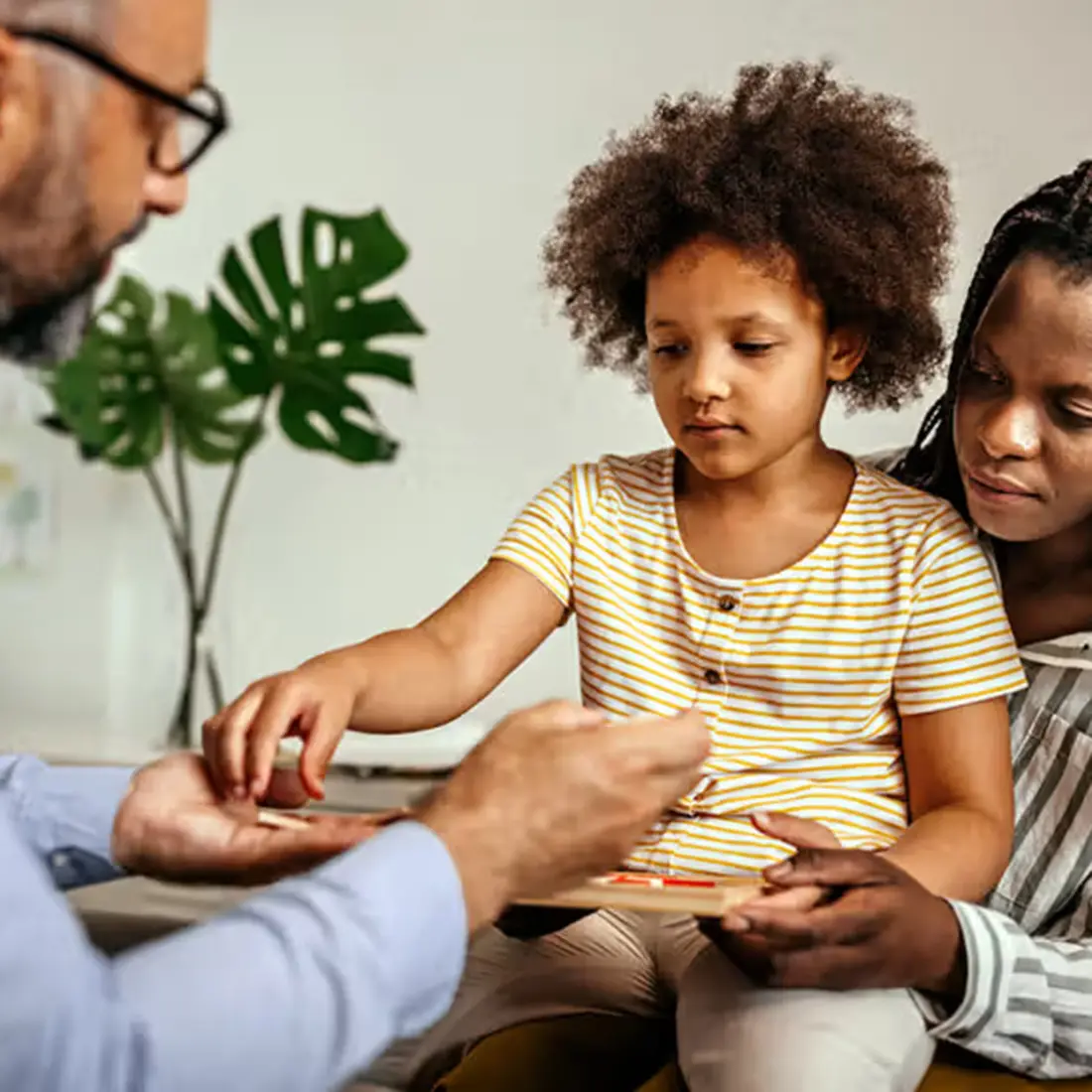
How long it has been going on. Most children have difficult weeks. A pattern that has held for a couple of months is worth paying attention to.

Child Counselling & Therapy in Brampton
When You Can Tell Something Is Wrong, but Not What
The meltdowns last longer than they used to. Or the stomach aches arrive every school morning and disappear by Saturday. Or a child who used to talk has gone quiet, and every question gets a shrug.
You have tried asking. You have tried waiting. Someone has probably told you it is a phase, and it may well be. But you are the one who notices the small things, and something has shifted. At C.S. Counselling & Consulting Services, support for a child usually begins with a conversation with you about what you have been seeing at home.
Start With a Conversation
Book a Free Initial ConsultationWhat Is Children's Counselling?
Children's counselling is therapy that is adapted to a child's age, development, and daily life. It is not adult therapy with simpler words.
Young children rarely have the vocabulary for what they feel, and they often do not connect a feeling to the thing that caused it. So distress tends to show up instead through behaviour. Anger, clinginess, tears, refusal, headaches, disrupted sleep, or a child who has simply stopped being themselves.
The behaviour is usually the message, not the problem. A child also has very little control over their circumstances. They cannot change schools, choose their classroom, or step out of what is happening at home. Good work with children takes their circumstances seriously, rather than treating the child as the only thing that needs to change.
Counselling can help a child understand their feelings, express them, and build skills for their hardest situations.
Signs a Child May Benefit From Support
Children signal difficulty through change rather than explanation. What usually matters is not the behaviour itself but how long it has lasted and how much of their world it has affected.
Parents often get in touch when they notice:
- Behaviour that has changed and stayed changed, at home, at school, or both
- Big feelings that overwhelm the child, with anger or distress that takes a long time to settle
- Frequent physical complaints, particularly headaches or stomach aches, once medical causes have been ruled out by their doctor
- Reluctance to go to school, or a shift in how they are managing there
- Changes in sleep, appetite, or a return to behaviours they had outgrown
- Difficulty making or keeping friends, or withdrawing from play they used to enjoy
- Distress at separation that is out of step with their age
- Sadness, worry, or self-critical comments that keep coming back
Childhood involves change, and not all of it is cause for concern. Trust what you are noticing over time.
Is This a Phase, or Something My Child Needs Help With?
This is the question most parents sit with for months, and there is no single test that settles it. A few things tend to be more useful than the behaviour itself.
Whether it shows up in more than one place. If something appears only at home, it may be about something specific to that home. Something that has spread to school, friendships, and family time is usually working harder on the child.
Whether it is interfering. Friendships, learning, sleep, eating, and the things they used to enjoy are the parts of childhood that matter most.
Whether your child seems distressed by it. Some children are managing fine and simply behaving in a way adults find difficult. Others are struggling, and their behaviour shows what that struggle looks like from the outside.
Whether it started after something changed. This could be a new school, a new baby, a separation, a bereavement, a move, or an illness in the family. Children often react to change with a delay, well after the adults have moved on.
You do not need to be sure before booking a consultation. Part of what an initial conversation is for is working out whether counselling is the right step at all, and sometimes the answer is that it is not yet.

How Does Therapy Work With a Child Who Cannot Explain How They Feel?
This issue worries most parents, and reasonably so. A seven-year-old asked how they feel and usually says "fine" and means it, because that is genuinely as far as they can get. Therapy with children does not depend on them explaining themselves.
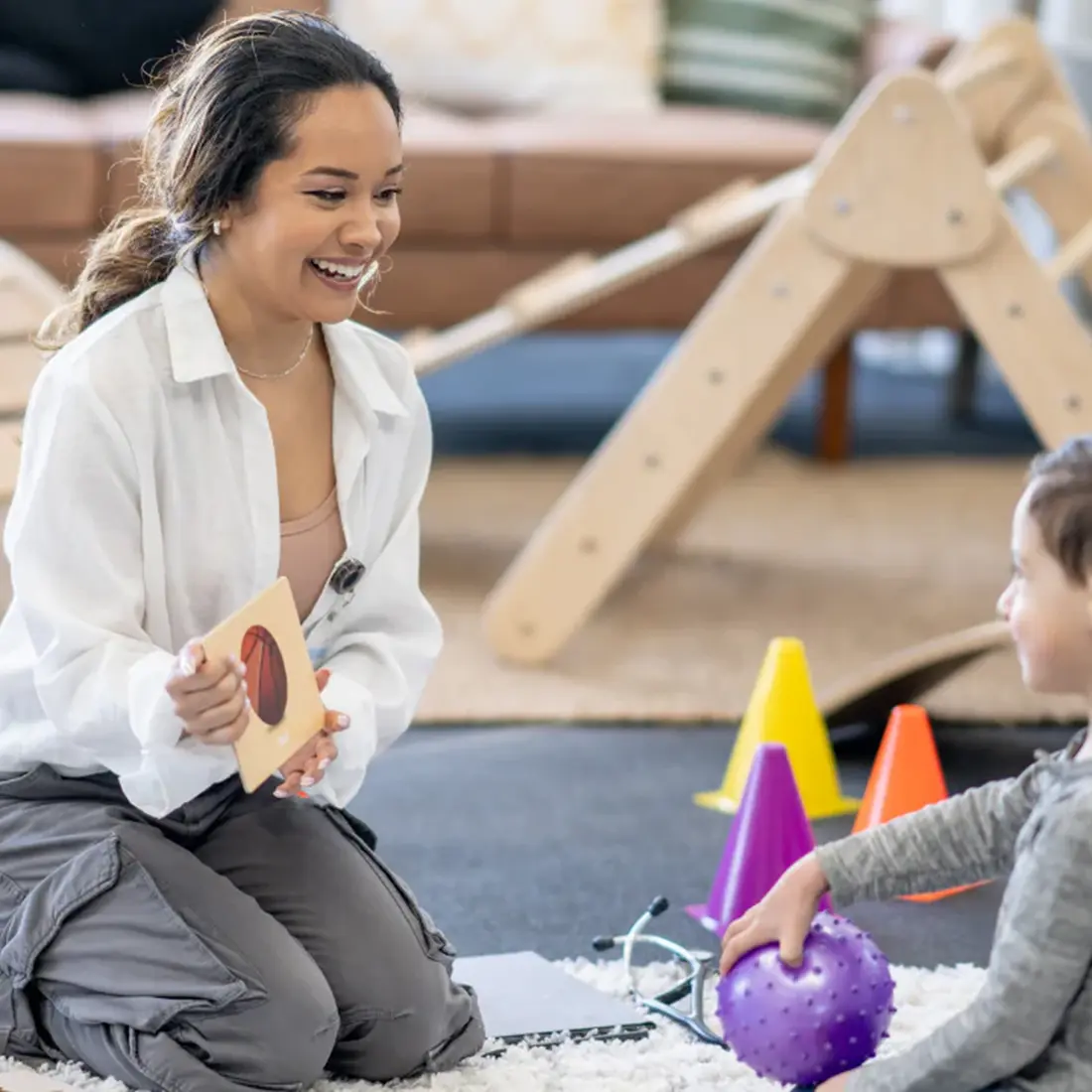
Play, drawing, stories, and games become the way the work happens. A child who cannot describe feeling left out may show you this feeling in how they set up a game. A child who cannot say they are frightened about what happens at home may draw a house with something missing. Trained therapists pay attention to these patterns over time rather than asking a child to translate their inner life into adult language on demand.
Sessions also build practical skills in ways a child can actually use. They notice anger arriving in their body before it takes over. Having something to do with a worry other than carry it. Words for a feeling, so it can be named instead of acted out.
Older children often talk more directly, and the work shifts accordingly. The approach follows the child rather than the other way around.
What a parent usually notices first is not a child who suddenly discusses their emotions. It is a shorter recovery from a hard moment or a slightly easier morning.
What Counselling Can Help With
Children come to us for many reasons, most often anxiety and worry, big emotions and anger, low mood, or difficulty adjusting after a change at home. Our therapists also work with:
- Behavioural concerns at home or at school
- School refusal, school stress, and performance worry
- Friendship difficulties, exclusion, and bullying
- Separation anxiety
- Adjusting to parental separation or divorce
- Grief and loss, including the death of a family member or pet
- Confidence and self-esteem
- Sibling conflict and changes in the family
- Settling into life in Canada as a newcomer child
What to Expect
The first appointment is usually with parents rather than the child. You will be asked about what you see, when it started, what home and school are like, and what you hope will be different. It helps the therapist begin with context instead of guesswork.
Your child's first session is a chance for them to get comfortable, nothing more. They will not be asked to perform, explain themselves, or discuss anything before they are ready. Children are usually told plainly that the session is a place to play and speak with someone whose job is helping kids with tricky feelings.
From there, sessions may look at what makes the difficult moments better or worse, what your child is already doing that works, and practical strategies for school, friendships, and home.
Progress with children is rarely a straight line, and regression during stressful periods is normal rather than a sign the work is failing.
Where Parents Fit In
You are part of the process, not outside it.
Children spend an hour a week with a therapist and the rest of it with you. Much of the change happens at home, which is why parent involvement is usually built into the work rather than added at the end.
In practice, that can mean parent-only sessions, regular conversations about how things are going, or time spent thinking through how to respond differently to a recurring situation. Your therapist will discuss what makes sense for your child's age and circumstances.
What is shared with you is handled openly from the start. Young children do not have the same confidentiality as adults, but they still have some privacy in what they say, and your therapist will clearly explain how this process works for your child's age before the work begins.
Approaches Your Child's Therapist May Draw On
Play-based and creative approaches
Play-based and creative approaches let younger children work through experiences using activity, drawing, and stories rather than conversation.
Cognitive Behavioural Therapy (CBT)
Cognitive Behavioural Therapy (CBT) can be adapted for children, helping them link what they think, how they feel, and what they do next in language that fits their age.
Solution-Focused Therapy
Solution-Focused Therapy looks at when the difficulty is less present and what can be built on.
Family-inclusive work
Family-inclusive work brings parents or siblings into sessions where the difficulty sits in the relationships around the child.
Your therapist will discuss what may suit your child within their training and scope.
Listen. Understand. Support.
Children arrive with very different situations, so we do not start with a fixed plan.
Listen.
To your child at their pace and in their way, and to you about your experience.
Understand.
We consider what is happening around the child as well as within them: school, friendships, family, culture, and any recent change.
Support.
We work toward practical, evidence-informed strategies that fit your child's age and your family's actual life.
Meet the Therapists Who Work With Children
Our team includes psychotherapists and registered social workers, and not every clinician works with every age group. When you get in touch, we will discuss your child's age, what has been happening, and which therapist may be a good fit.
You can find each professional's designation, training, languages, populations served, and areas of practice on their profile.
Meet Our Counselling Team →Why Families Choose C.S. Counselling
We have supported clients and families in Brampton and across Ontario since 2011. The practice is led by Coslyn Selby, RSW, a Registered Social Worker and psychotherapist with over 20 years of professional counselling experience.
Fit matters a great deal with children, and it matters for parents too. You need to feel comfortable enough to be honest about what is happening at home, including the parts you would rather not say out loud. If the fit is not right, tell us, and we will talk about options.
Culture, Language, and Family Life
Many children in Brampton grow up moving between more than one set of expectations. What happens among friends at school and what is expected at home are not always the same, and children manage that gap from a very young age.
In newcomer families, children often adjust to a new country faster than the adults around them, which can leave everyone feeling a little out of sync with each other.
Families also differ in how openly emotions are discussed, and there is no single correct way for a family to work. Where culture, language, or background matters to you, there is room for it here. Where it does not, it will not be treated as the explanation for what your child is going through.

Children's Counselling in Brampton and Online across Ontario
In person, at our Brampton clinic:
C.S. Counselling & Consulting Services2250 Bovaird Drive E, Suite 408,
Brampton, ON L6R 0W3
We support children and families from Brampton, Mississauga, Caledon, and the wider Peel Region, along with the Halton Region, Toronto, and surrounding communities.
Virtual sessions may be available for suitable clients across Ontario, and they can work well for parent sessions and for older children. Younger children usually do better in person, where play and activity are part of how the work happens. Your therapist will advise you on what is likely to suit your child.
Frequently Asked Questions
At what age can a child start counselling?
Children can be supported from a young age, with the approach changing considerably by age. The initial consultation is where we discuss whether counselling is appropriate for your child at this time and in what form it should take.
Do I need a referral or a diagnosis for my child to see a therapist?
No. Children attend counselling because something in their life is difficult. No referral or diagnosis is needed.
Will I be told what my child says in sessions?
Your therapist will explain at the start exactly how the process works for your child's age. Parents are generally kept informed about how things are progressing, while children are still given enough privacy for the sessions to be useful to them.
What if my child does not want to go?
This is common, and it is often nervousness about the unknown rather than refusal. Occasionally a parent session first is the more useful starting point, and pressure tends to be counterproductive.
How do I explain counselling to my child?
Simply and without a build-up. Most children accept a plain explanation, such as meeting someone whose job is to help kids with big feelings and that there will be things to play with.
Can counselling help a child who is struggling at school?
School difficulties are one of the most common reasons parents get in touch. Sessions may look at worry, avoidance, friendships, confidence, and what can realistically change.
Can counselling help my child cope with separation or divorce?
Yes, and it is a frequent reason families reach out. Support may involve your child, you as parents, or both, depending on what is happening.
How long does children's counselling usually take?
There is no fixed number of sessions. It depends on your child, what is happening, and what you are working toward, and your therapist will review this with you as you go.
Start With a Conversation
Parents often wait, hoping it will settle on its own. Occasionally it does. Sometimes waiting just means a child carries something alone for longer than they needed to.
You don’t need to know what’s wrong or have anything figured out before getting in touch.
Tell us what you have been noticing. That is the whole first step.
If you are worried about a child's immediate safety, please contact emergency services or a local crisis line. Ongoing counselling is not an emergency service.