
You already have some of the answer
You have coped with difficult things before, including this one. Those methods are worth identifying rather than replacing.


Some people arrive at counselling with a detailed understanding of their own history.
They can explain exactly why they are the way they are. They have traced it back to childhood, to a relationship, to a job that broke something. What they cannot do is get from that understanding to a different Tuesday morning.
Solution-focused brief therapy begins with a different question. Not why is the problem happening, but what would need to be different, and when has some of that already happened?
At C.S. Counselling & Consulting Services, solution-focused therapy may be incorporated into counselling when it fits your concerns, goals, and the professional training of your therapist.
Solution-focused counselling is available through appropriately trained clinicians at our Brampton practice, with virtual counselling available across Ontario.
Solution-Focused Brief Therapy, sometimes shortened to SFBT or SFT, is a practical approach built on a straightforward observation.
No problem happens all the time.
Someone who says they are constantly anxious is, on closer inspection, less anxious on certain days, in certain rooms, and with certain people. Someone whose relationship is always tense had a reasonable weekend last month. Those moments usually go unexamined because they do not feel significant.
Solution-focused work treats them as the most useful information available. If something was slightly better, something was different. Understanding what was different is often more practical than understanding the origin of the difficulty.
The approach rests on a few ideas:
You have coped with difficult things before, including this one. Those methods are worth identifying rather than replacing.
A modest shift in one part of a week can alter how the rest of it goes. The approach searches for achievable changes rather than ideal ones.
The work is directed by what you want to be different, not by a therapist's view of what ought to change.
Some difficulties can improve without ever fully explaining where they came from.

Depending on your circumstances and your therapist's clinical assessment, this approach may support people experiencing:
It is often useful for people who have already tried to think their way out of something and found that understanding it did not change it.
ACT is not automatically right for everyone, and a therapist should assess that rather than assume.
A therapist using this approach spends less time on the history of a problem and more on its edges.
You may be asked questions such as
These are not rhetorical. The answers tend to contain something usable.
One well-known technique is sometimes called the miracle question, which asks you to describe in detail what your life would look like if the difficulty were resolved overnight without your knowing. The purpose is not fantasy. It is to produce a specific, concrete picture of the goal, because vague goals are very hard to work toward.
Scaling is also common. You might be asked to rate where you are on a scale of one to ten, then asked what would move you a single point. Not to ten. One point.

Sessions tend to be focused and forward-looking.
You might spend time:
Your therapist will likely ask you to notice things between sessions rather than complete exercises. Often the instruction is simply to pay attention to what goes better, because people are considerably better at noticing what goes badly.
The word "brief" in the name refers to the intent, not a fixed limit. Some people work through something in a handful of sessions. Others continue longer or move into a different approach as the work develops.
It may suit you if you do:
It may suit you less if you want to spend significant time understanding how the past shaped you, or if what you are dealing with is complex, long-standing, or connected to difficult earlier experiences. In those cases another approach, or a combination, may be more appropriate.
You do not need to decide on an approach before speaking with a therapist. Working out what fits is part of what the first conversation is for.
Counselling here does not begin with which technique to use. It begins with what has been happening.
We start with your account of what has been going on and what you would like to be different.
We look at the situation as a whole, including what is already working.
Where solution-focused therapy is clinically appropriate, your therapist may use it to help you identify practical steps and build on existing strengths.
C.S. Counselling has supported clients since 2011, and solution-focused work is used by every therapist on our team, alongside other approaches:
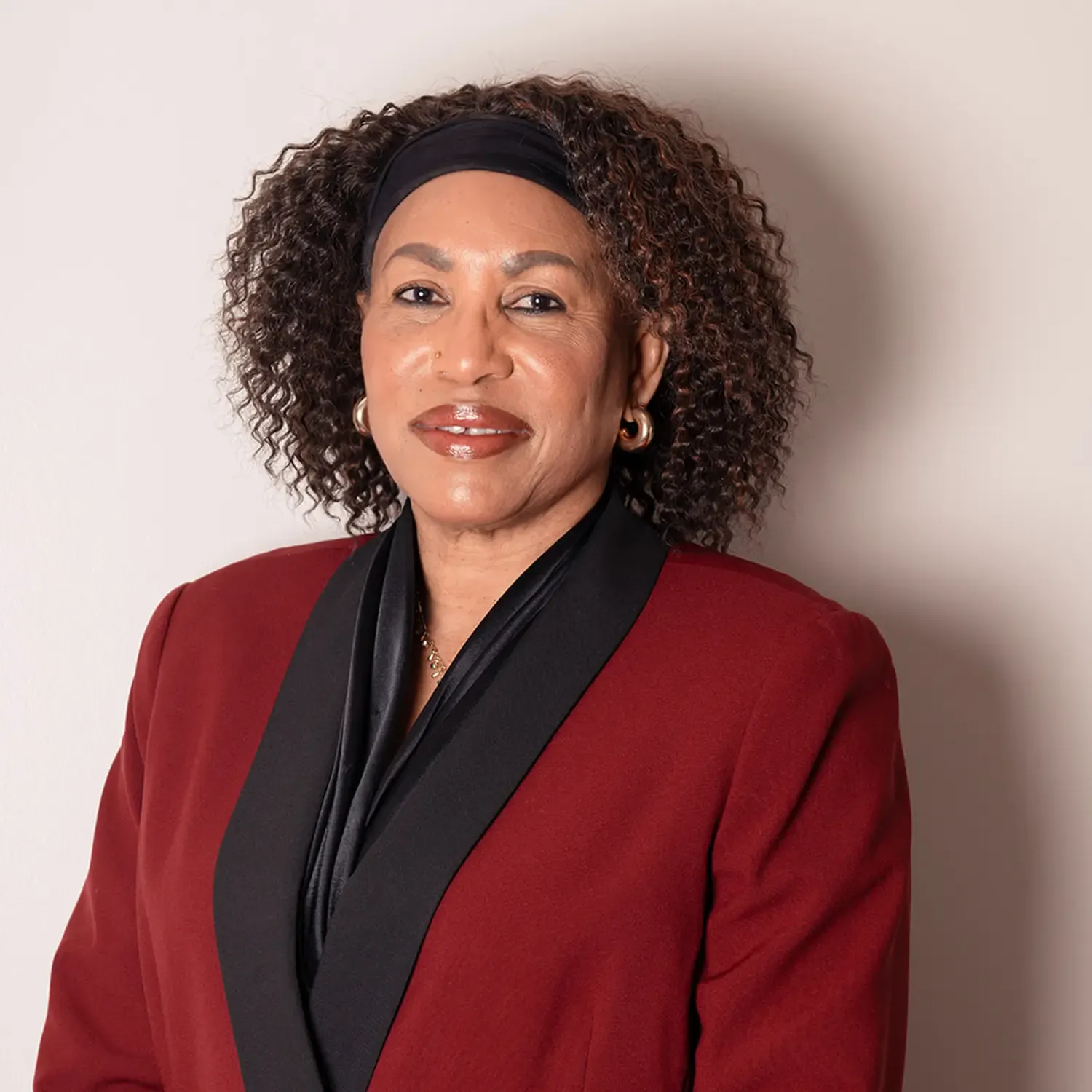
Founder and Clinical Lead, Psychotherapist and Registered Social Worker, with over 20 years of counselling experience
Psychotherapist, and Registered Social Worker
Canadian Certified Counsellor
Registered Psychotherapist
Registered Psychotherapist (Qualifying)
Registered Psychotherapist (Qualifying)
That means you can be matched on what matters most to you, such as language, experience with your particular concern, or availability, without giving up this approach.
Solution-focused interventions are only provided within a clinician's professional training, competence, and scope.
Meet Our Counselling Team →In-person counselling is available at the following locations:
C.S. Counselling & Consulting Services 2250 Bovaird Drive E, Suite 408 Brampton, ON L6R 0W3Online sessions across Ontario are available with Sabrina, Parveen, Pallavi, Komal, and Sierra.
No. Brief describes the intent to work efficiently toward a goal. The number of sessions depends on you, your situation, and your progress.
Not exactly. Your history is acknowledged and may be relevant. The emphasis simply falls more on what helps now than on tracing the origin of the difficulty.
No. Nobody will suggest your difficulty is not real or ask you to adopt a more positive outlook. The approach is about identifying what has genuinely worked, which is a practical exercise rather than an attitude.
Often, yes. Some clients work with solution-focused therapy alongside CBT, mindfulness-informed strategies, or other approaches, depending on their needs and clinician.
It can be used with more than one person, where it is clinically appropriate. Your therapist will advise.
Yes, across Ontario with selected therapists. You can discuss whether this approach is appropriate with your therapist.
You do not need to know which therapeutic approach suits you before getting in touch.
Tell us what has been happening, what has been difficult, and what you would like to be different. From there we can explore whether solution-focused therapy or another approach may fit.
We'll start by listening.
Book Your Free 30-Minute ConsultationC.S. Counselling & Consulting Services
2250 Bovaird Drive E, Suite 408
Brampton, ON L6R 0W3
Solution-Focused Brief Therapy in Brampton | Virtual Counselling Across Ontario
If you are in immediate distress or concerned about your safety, please contact emergency services or a local crisis line. Ongoing counselling is not an emergency service.