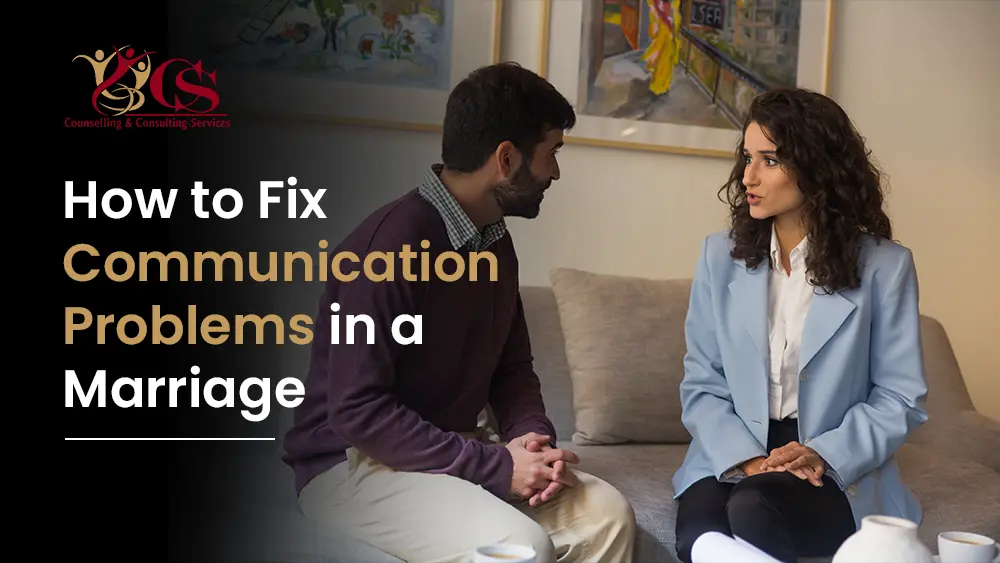
You ask your partner a simple question, and suddenly, you're arguing about something that happened three months ago. Or perhaps you try explaining how you feel, but your spouse changes the subject. After a while, you stop bringing things up because you already know how the conversation will end.
These moments happen in many marriages. “But if couples continue to avoid the difficult conversations, resentment builds. Learning how to fix communication problems in a marriage can help you talk about disagreements without turning every discussion into a fight.
How to Fix Communication Problems in a Marriage When Every Conversation Turns Into an Argument
When couples argue, the problem isn't always what they're discussing. Sometimes, it's how they speak to each other.
One feels neglected, the other constantly criticized. Both want to be understood, but neither feels heard.
The Gottman Institute states there are four communication behaviors that can hurt relationships: criticism, contempt, defensiveness and stonewalling.
You may notice these patterns when your partner withdraws during arguments, brings up past mistakes, or reacts angrily to ordinary questions.
Recognising what happens during disagreements is the first step towards changing it.
Why Do Married Couples Stop Communicating?
Couples rarely stop communicating for one reason. Problems often develop slowly, especially when partners have different expectations.
Common causes include:
- Work and financial stress: Daily worries leave little patience for difficult conversations.
- Unresolved arguments: Past disagreements return whenever something new goes wrong.
- Lack of emotional attention: One partner feels their feelings no longer matter.
- Parenting responsibilities: Couples focus on their children and neglect their relationship.
- Anxiety and anger: Strong emotions make ordinary disagreements harder to handle.
For some couples, Anxiety Counselling or Anger Management can help them understand how personal stress affects their relationship.
7 Ways to Fix Poor Communication in Marriage
1. Stop Trying to Win Every Argument
Marriage isn't a competition. Yet many couples spend arguments proving who's right instead of understanding what happened.
Rather than collecting examples of your partner's mistakes, explain the problem you're trying to solve.
You can disagree without insulting each other. Sometimes it is more important to acknowledge your partner’s feelings than to win the argument.
2. Listen Without Interrupting
Think about the last serious conversation you had with your spouse. Did you listen carefully, or were you preparing your response?
Allow your partner to finish speaking. Ask questions instead of making assumptions.
Empathy, acceptance and understanding are valued in Person-centered Therapy. These principles can also help couples listen without immediately judging each other.
3. Replace Blame With Clear Communication
Statements such as "You never care about me" often create defensiveness.
Explain the situation instead.
For example, say, "I felt hurt when you cancelled our plans without telling me."
This gives your spouse something specific to respond to.
In Couples Counselling, partners can practise expressing their concerns without turning conversations into personal attacks.
4. Don't Discuss Serious Problems When You're Angry
If you're shouting, crying, or struggling to think clearly, continuing the argument may make matters worse.
Take a breather. Go for a walk, drink some water, or sit somewhere quiet.
Tell your partner when you'll return to the discussion.
Cognitive Behavioural Therapy (CBT) can help people recognise thoughts that increase anger and learn different ways to respond.
5. Talk About Feelings, Not Just Responsibilities
Many married couples spend their evenings discussing groceries, bills, school schedules, and household work.
But when was the last time you asked your spouse how they were feeling?
Spend time discussing worries, hopes, or something that made you happy.
Emotionally Focused Therapy for Couples helps partners explore the feelings and relationship patterns that sometimes remain hidden beneath repeated arguments.
6. Understand Why Your Partner Pulls Away
Some people want to resolve arguments immediately. Others need time before they're comfortable speaking.
These differences can create misunderstandings.
Attachment-Based Therapy explores how past relationship experiences influence intimacy, trust, and conflict response.
When times get tough, ask your partner what they need instead of assuming silence is a rejection.
7. Consider Marriage Counselling Before Problems Grow
You don't need to wait until separation becomes a possibility before asking for help.
If the same disagreements keep returning, professional support may help you identify what's happening.
Family Counselling can also help when parenting, relatives, or household responsibilities contribute to relationship tension.
It’s not to decide who’s wrong. It's to understand the problem and consider healthier ways of handling it.
Small Communication Habits That Make a Difference
Improving marriage communication doesn't always require long conversations.
Start with everyday habits.
- Ask your partner about their day without checking your phone.
- Thank them for something they did.
- Discuss one problem at a time.
- Apologise when you've hurt their feelings.
- Avoid sarcasm during disagreements.
- Spend time together without talking about responsibilities.
Even ten minutes of uninterrupted conversation can give couples an opportunity to reconnect.
But when the conversations are threatening, intimidating or abusive, safety trumps fixing communication. Seek appropriate support rather than trying to resolve the situation through arguments.
Get Support for Marriage Communication Problems at CS Counselling
If every conversation ends in frustration, you don't have to keep repeating the same arguments.
If you are having trouble with marriage conflicts, feeling disconnected from your partner, or have other relationship issues, CS Counseling is here to help. Couples can explore recurring disagreements through counselling and work towards communicating more respectfully.
Whether it’s Online Counseling or in-person counseling in Brampton, our professional therapists can help you understand your relationship challenges and figure out next steps.
Frequently Asked Questions
1. What is the biggest communication problem in marriage?
Not listening, blaming each other, and avoiding difficult conversations are common problems.
2. How can I improve communication with my husband or wife?
Listen carefully, speak respectfully, explain your feelings, and avoid bringing up unrelated arguments.
3. Can couples counselling help save a marriage?
Couples counselling may improve understanding and communication, but outcomes depend on the relationship and both partners' circumstances.
4. Why does my spouse avoid serious conversations?
Stress, fear of arguments, emotional exhaustion, or difficulty expressing feelings may contribute to avoidance.
5. How long does it take to improve communication in marriage?
There's no fixed timeline. Progress depends on the problems involved and how consistently both partners practise healthier habits.